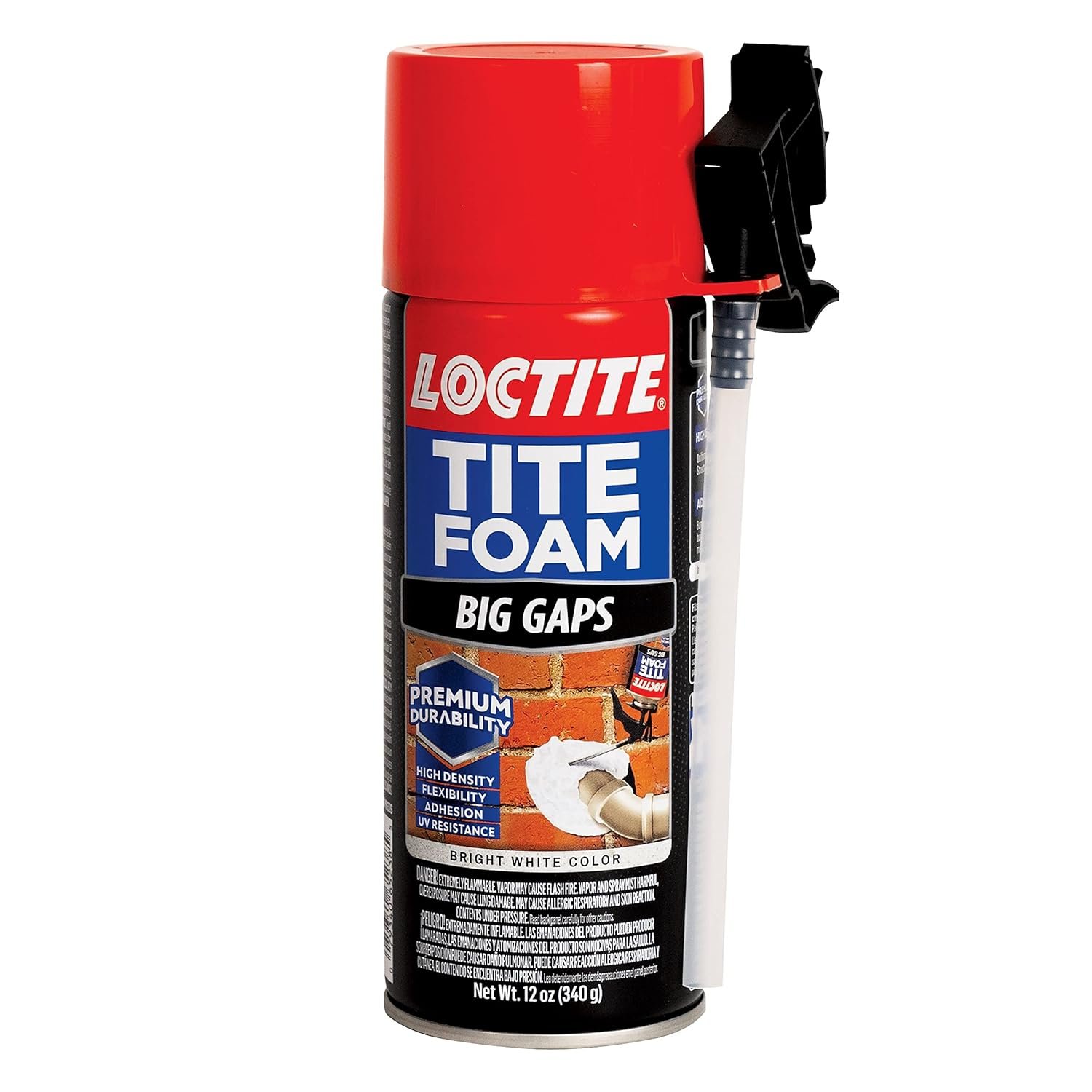
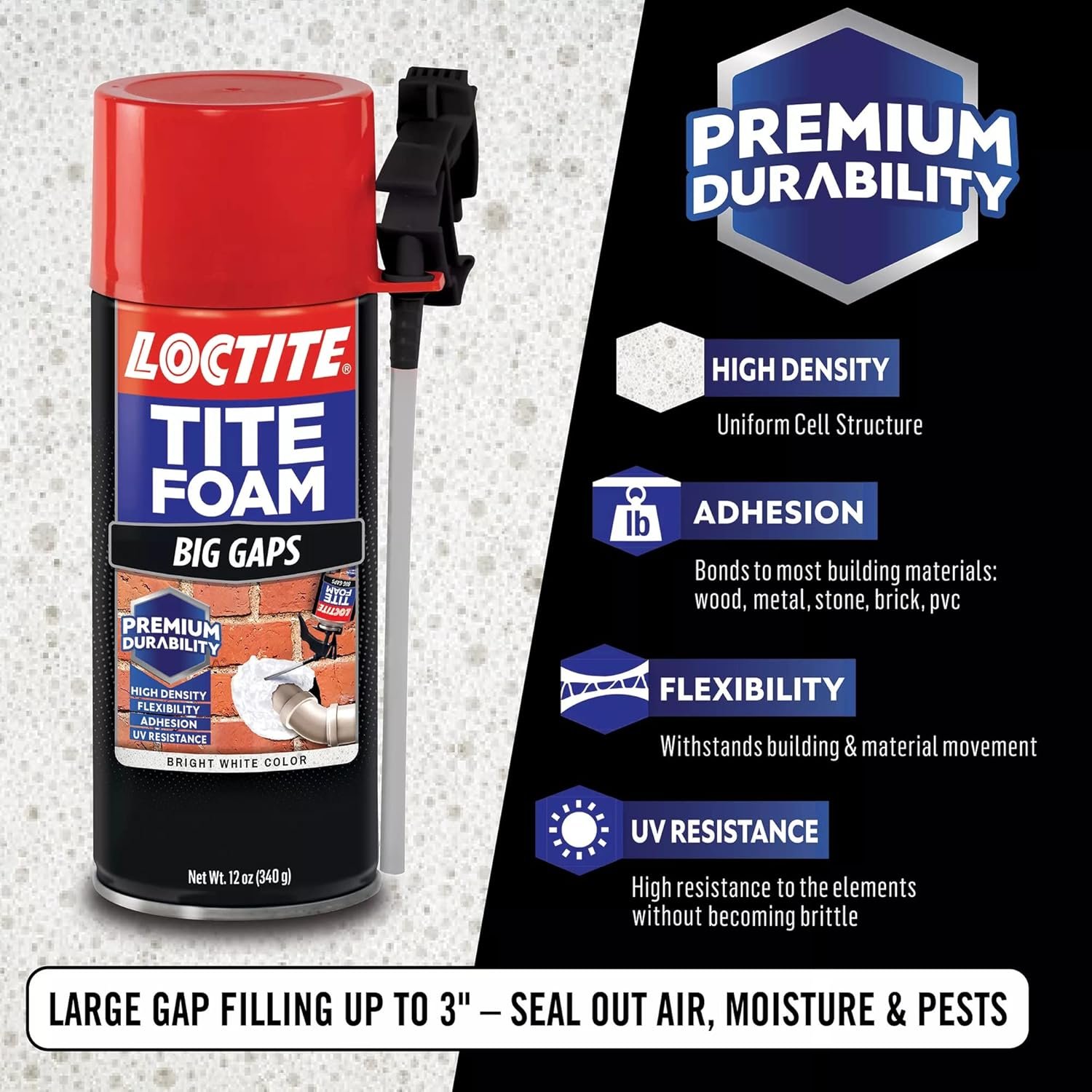
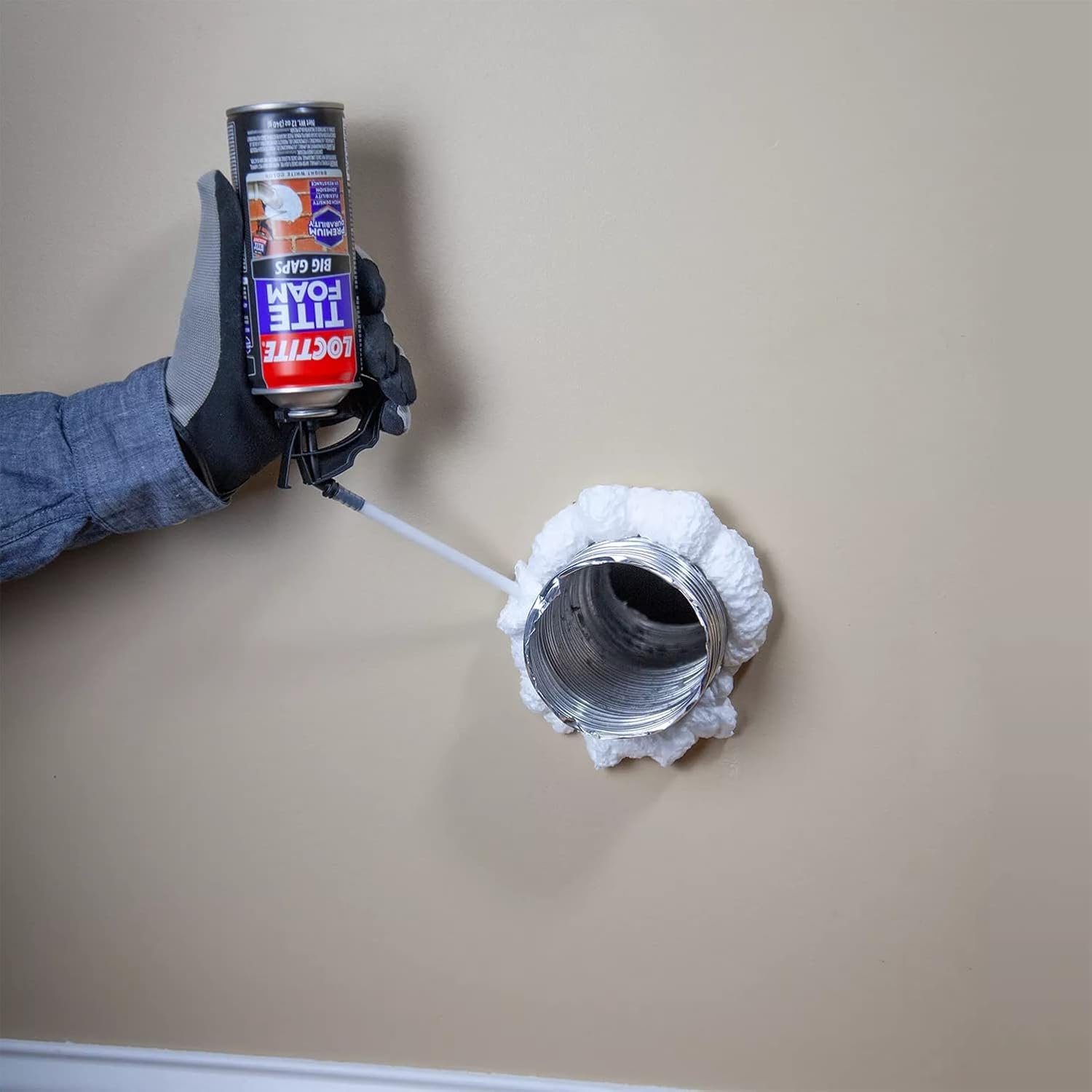

Seal, fill, and insulate big gaps up to 3 inches wide with Loctite Tite Foam Big Gaps Spray Foam Sealant. This high-density polyurethane foam offers strong adhesion to most building materials and stands up to UV exposure, making it great for tough, outdoor repairs. With its durable, uniform structure, it's a go-to for sealing large openings in construction or renovation projects. Perfect for single-use applications where a long-lasting, flexible seal is needed.
Table of Contents
Gaps Spray Sealant: When you’re tackling home insulation, draft prevention, pest exclusion, or gap sealing during renovations, one product that frequently crops up is Loctite Tite Foam Big Gaps Spray Foam Sealant. But does it really live up to its promise? In this Gaps Spray Sealant: Reality Check, we’ll dive into the performance, practicality, pros, cons, and use‑case scenarios to help you decide whether this expanding foam is the right solution for your projects.
Whether you’re a seasoned DIYer, a first‑time renovator, or someone grappling with stubborn air leaks or cracks, this review will shine a light on real performance and expectations.
1. What Is Loctite Tite Foam Big Gaps Spray Foam Sealant?
Loctite Tite Foam Big Gaps is an expanding polyurethane foam intended to fill, seal, and insulate sizable gaps and cracks — especially those up to 3 inches wide. Unlike silicone caulk or smaller foam products intended for narrow joints, this spray foam is formulated to expand significantly and bond to a wide range of common building materials, including wood, concrete, brick, stone, metal, and PVC.
In this Gaps Spray Sealant: Reality Check, we’ll look at how well it lives up to claims like strong adhesion, insulation performance, UV resistance, and overall ease of use.

2. Key Features of This Gaps Spray Sealant
Here are the major characteristics that define Loctite Tite Foam Big Gaps:
2.1 Expands to Fill Large Gaps (Up to 3 Inches)
The primary utility of this Gaps Spray Sealant is its ability to expand after dispensing. This property makes it especially useful for filling large gaps and cracks where traditional caulking or low‑expansion foam simply won’t reach or hold.
Unlike thin sealant beads, this foam forms a dense, uniform cell structure that fills voids thoroughly. This makes it well‑suited for places such as:
- Around window and door frames
- Between framing lumber
- In crawlspace and attic gaps
- Around chokepoints in exterior walls
External resource:
- Why air sealing matters (EPA) — https://www.epa.gov/greenhomes/air‑sealing‑your‑home‑common‑areas‑to‑seal
2.2 High‑Density Foam for Insulation and Durability
The expanding foam dispensed by this Gaps Spray Sealant is high density, offering decent insulation value. While it doesn’t replace full‑scale spray foam insulation systems professionally installed, it does significantly reduce air infiltration in places where drafts occur.
This makes it a good stop‑gap for energy bill reduction and for improving comfort in problem areas.
2.3 Strong Adhesion to Common Materials
A notable advantage is how well this foam bonds to diverse materials. Whether your gap is in concrete, brick, wood, metal, or PVC, the polyurethane chemistry provides adhesion that’s stronger and more durable than that of many traditional sealants.
This broad compatibility is critical when evaluating a product in a Gaps Spray Sealant: Reality Check, especially if you’re sealing atypical or mixed materials.
2.4 UV Resistance for Exterior Exposure
Unlike some foams that degrade when exposed to sunlight, this product offers UV resistance. That means you can use it for exterior repairs around window sills, siding edges, or other outdoor gaps without fear of sun damage — though painting or cladding over the foam is still recommended for best long‑term aesthetics.
2.5 Flexibility and Movement Tolerance
Because buildings and materials expand and contract with temperature and moisture changes, any effective sealant must tolerate movement without cracking or losing adhesion. The Loctite Tite Foam Big Gaps product maintains flexibility once cured, which is a key factor in its effectiveness as a Gaps Spray Sealant.
3. How It Works — Applying This Gaps Spray Sealant
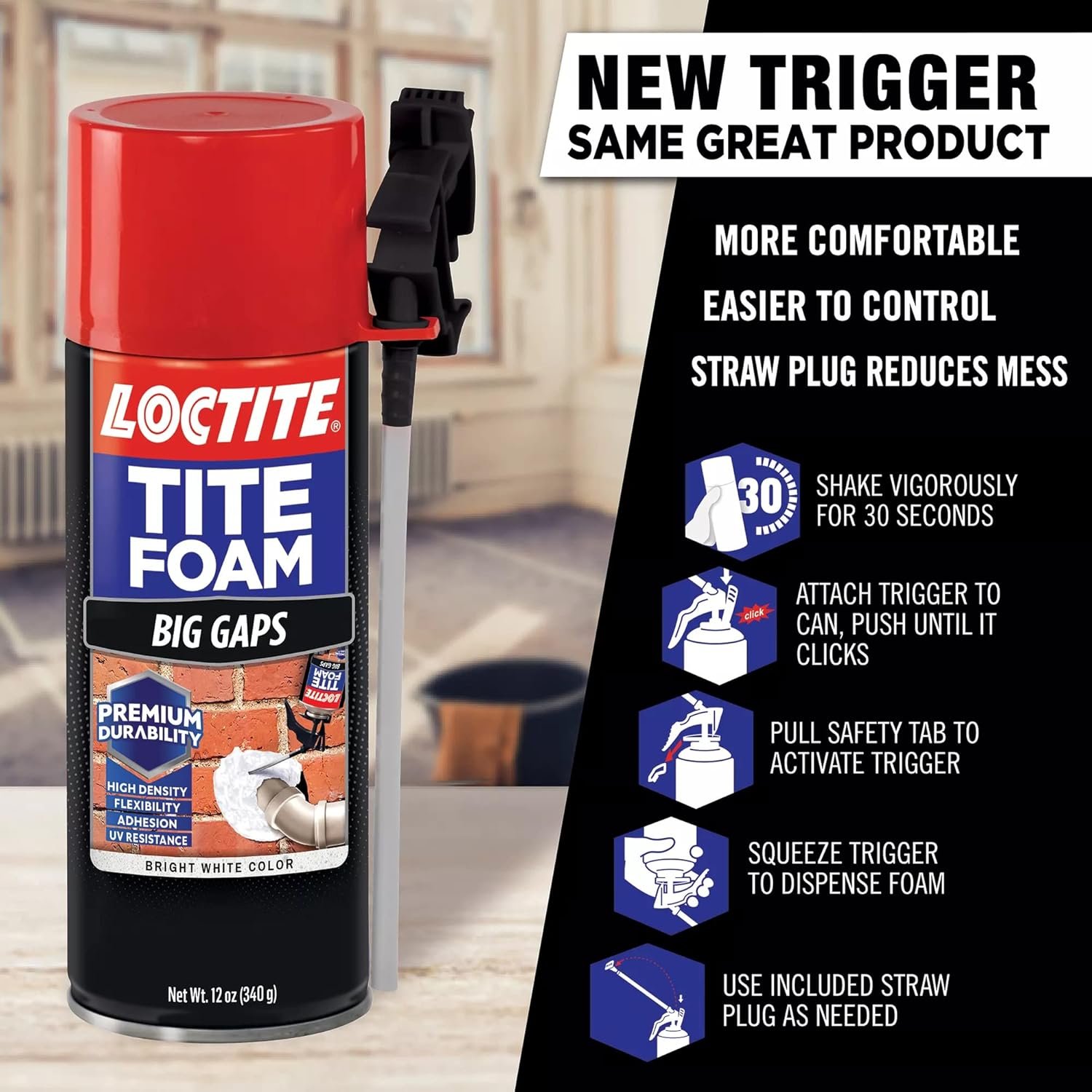
Applying this spray foam is simple in concept but requires a bit of preparation:
- Clean the surface — remove dust, dirt, and loose debris.
- Shake the can well — to ensure proper mixing of chemicals.
- Wear gloves and eye protection — the expanding foam is sticky and hard to remove once cured.
- Apply in layers — fill a bit, allow it to expand, then add more if needed.
Unlike caulk guns, this product dispenses directly from the can through a straw or tube. Once started, be aware you cannot reseal the can effectively — a major limitation we’ll address below.
External resource:
- Spray foam application guide (Green Building Advisor) — https://www.greenbuildingadvisor.com/article/how‑to‑install‑spray‑foam‑insulation
4. Real Performance: Gaps Spray Sealant in Action
4.1 Insulation and Draft Reduction
One of the most common uses for this sealant is eliminating “cold spots” around doors or windows. In many real user reports, the Gaps Spray Sealant: Reality Check shows this foam can significantly reduce airflow through large gaps, improving overall comfort and reducing reliance on heating or cooling systems.
4.2 Filling Odd Shaped Cavities
In older homes or renovation projects, you often encounter irregular voids that are too wide for standard caulk. This spray foam’s expansion nature allows it to conform to irregular spaces. Users appreciate that it fills voids completely, rather than leaving pockets of unsealed air.
4.3 Adhesion Over Time
Strong adhesion is one of this product’s strengths. Once cured, the foam remains bonded even if the surrounding materials expand, contract, or shift slightly with temperature changes.
Many reviewers compare this to lesser foams that can pull away or crack under stress — one of the main reasons we include adhesion as a focus in this Gaps Spray Sealant: Reality Check.
4.4 UV Exposure and Exterior Use
Homeowners using this spray foam on exterior gaps report that UV resistance holds up well, though most still prefer to paint over or cover the foam for best long‑term looks and weather resistance.
5. The Big Drawback — Single‑Use Can Limitations
The most significant downside, and one that frequently comes up in a Gaps Spray Sealant: Reality Check, is the single‑use can design. Once you depress the valve and start dispensing foam, you cannot reliably store and reuse the can later.
This means:
- Leftover foam goes to waste if your project doesn’t use all of it
- You might need extra cans for multiple small jobs
- It’s less cost‑effective if your use case involves frequent small repairs rather than one larger gap
Many users wishing to conserve material complain that a resealable foam or multi‑use applicator would be much more convenient, especially for roof flashings, pipes, small sealing tasks, or draft points at multiple disconnected locations.
6. Use Cases: Where This Gaps Spray Sealant Shines
6.1 Window and Door Frames
Gaps between framing and trim can allow cold air, moisture, or pests inside. This spray foam fills those wide gaps quickly and effectively, outperforming caulk when width exceeds 1/2 inch.
External resource:
- Window insulation and air sealing tips (Energy.gov) — https://www.energy.gov/energysaver/weatherize/air‑sealing‑your‑home/windows‑and‑doors
6.2 Basement and Crawlspace Gaps
Concrete and masonry often have irregular cracks that are tough to seal with silicone or caulk. The expanding nature of this foam helps make a durable, airtight seal that stands up to moisture and shifting loads.
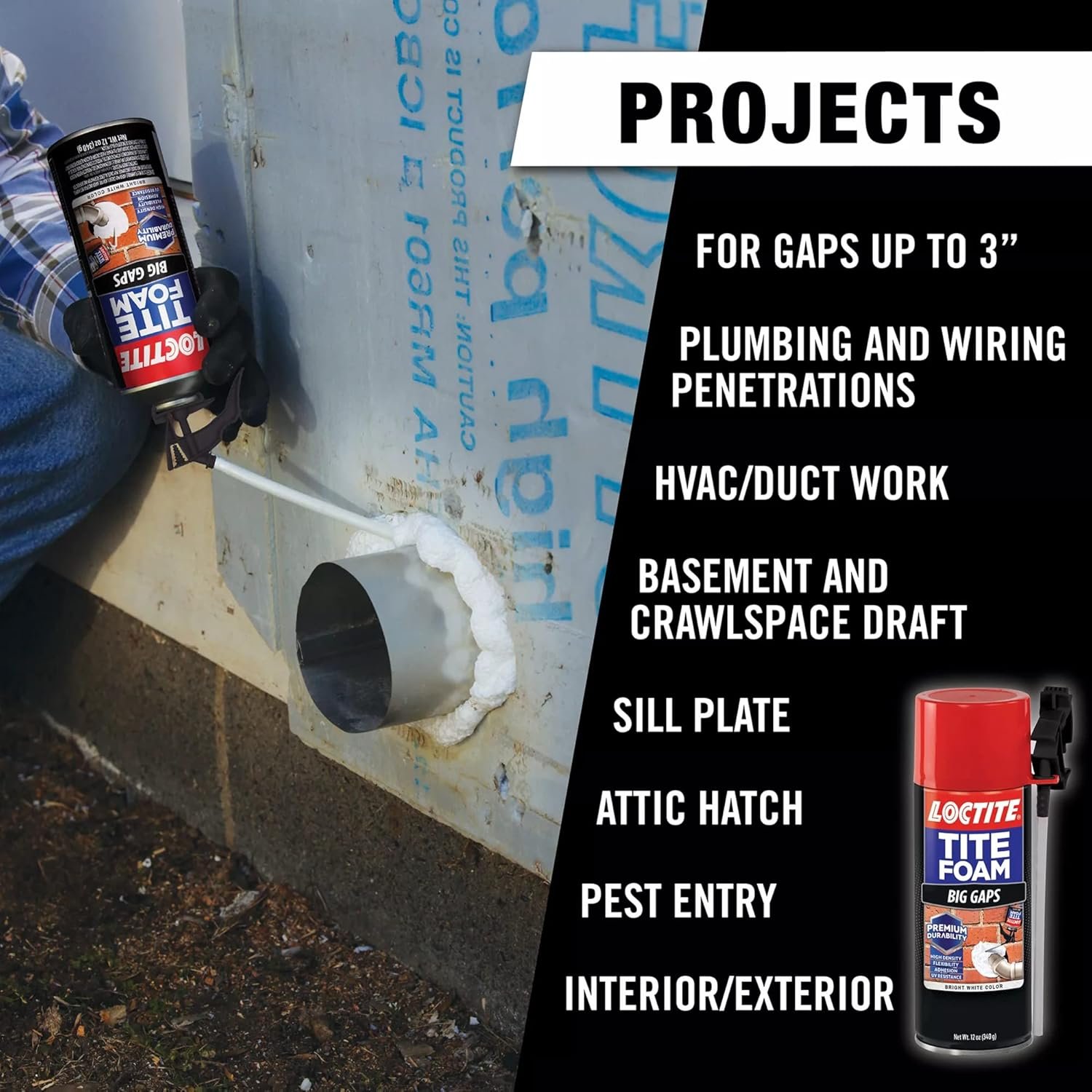
6.3 Around Pipes and Utility Entries
Where plumbing, electrical, or HVAC penetrations enter walls, gaps often exceed standard caulk capacity. This foam accommodates those larger voids and forms a solid barrier against drafts and pests.
Loctite official product page for the Big Gaps foam — features, specs, and usage:
https://www.loctiteproducts.com/products/central-pdp.html/loctite-tite-foam-big-gaps/SAP_0201HCL029E7.html loctiteproducts.com
Loctite Tite Foam Big Gaps on The Home Depot — retailer listing with details and Q&A:
https://www.homedepot.com/p/Loctite-TITE-FOAM-Big-Gaps-Spray-Foam-Bright-White-12-oz-Can-Insulating-Spray-Foam-Sealant-2839291/305120190 Home Depot
6.4 Renovation and Construction Projects
In new construction or during substantial renovation, large cavities and joints are common. This foam’s ability to fill wide areas makes it a go‑to for professionals and DIYers alike.
7. Common User Feedback — Gaps Spray Sealant: Reality Check
Positive Points Reported by Users
- Great for large gaps that are beyond typical caulk capacity
- Strong adhesion to most materials
- Dense foam with decent insulation properties
- UV resistance allows for exterior use
Criticisms and Caveats
- Single‑use can limitation leads to wasted product
- Beginners sometimes find application messy or imprecise
- Foam may expand more than expected if overfilled
External resource:
- Consumer tips on using spray foam (This Old House) — https://www.thisoldhouse.com/ideas/how‑to‑use‑expanding‑foam‑insulation
8. Pros and Cons — Gaps Spray Sealant: Reality Check
Pros
- Fills large gaps up to 3 inches wide
- Strong, durable foam once cured
- UV resistant for exterior applications
- Bonds well to a wide range of materials
- Reduces drafts and improves insulation
Cons
- Single‑use can wastes material if not used efficiently
- Difficult to reuse leftover foam
- Application can be messy for beginners
- Not suitable for tiny precision gaps
9. Tips for Best Results
To get the most from your Gaps Spray Sealant, follow these practical tips:
- Plan your application before opening the can to avoid waste
- Wear protective gloves and eye protection (polyurethane foam is sticky)
- Use a foam gun adapter (sold separately) for better control on multiple cans
- Trim cured foam with a utility knife for a neat finish
- Paint or cover exposed foam on exterior applications to protect against UV and aging
External resource:
- Spray foam safety and tips (Home Depot) — https://www.homedepot.com/c/ah/how‑to‑apply‑spray‑foam‑insulation/9ba683603be9fa5395fab901ae02bb
10. Final Verdict: Gaps Spray Sealant — Reality Check
In this Gaps Spray Sealant: Reality Check, Loctite Tite Foam Big Gaps Spray Foam Sealant proves itself to be a reliable and powerful product for filling, sealing, and insulating large gaps and cracks around the home. Its high‑density expanding foam delivers strong adhesion, good insulation properties, and a durable seal that stands up to exterior conditions.
The main drawback — the single‑use can design — is a legitimate concern for anyone with multiple small jobs or a desire to reuse leftover foam. However, for most homeowners and DIYers tackling one or few larger openings, the benefits far outweigh that inconvenience.
If you’re after a cost‑effective, heavy‑duty spray sealant that handles what caulk and low‑expansion foams can’t, this product earns its place in your toolkit — just be ready to plan your application carefully to minimize waste.

- Expands To Fill: Loctite Tite Foam Gaps & Cracks fills, seals, and insulates effectively around gaps and cracks up to 1 …
- Premium Durability: Polymer foam based on purified and concentrated ingredients withstands harsh UV rays for long-lastin…
- High Density Foam: Offers high density with a uniform cell structure for durability and overall insulation for your remo…
$25.99